
Kniru
Designing a way for NRI families to share finances, without sharing everything
Designing a way for NRI families to share finances, without sharing everything
How I went from a CEO ask to a feature that actually solved the trust problem families weren't talking about.
How I went from a CEO ask to a feature that actually solved the trust problem families weren't talking about.
My Role
UX Design Intern
UX Design Intern
Duration
May 2023 – Sept 2023
May 2023 – Sept 2023
What I did
UX/UI Design, Prototyping, User Research
UX/UI Design, Prototyping, User Research

tl;dr
tl;dr
What is it
What is it
A selective sharing feature inside Kniru that lets users share parts of their finances (balance, transactions, assets, liabilities) with family, instead of sharing everything or nothing.
A selective sharing feature inside Kniru that lets users share parts of their finances (balance, transactions, assets, liabilities) with family, instead of sharing everything or nothing.
Who it's for
Who it's for
NRI families, especially students studying abroad and their parents back home who wanted financial visibility without overstepping.
NRI families, especially students studying abroad and their parents back home who wanted financial visibility without overstepping.
My role
My role
Solo designer reporting directly to the CEO. Led research, flows, design decisions, and engineering handoff.
Solo designer reporting directly to the CEO. Led research, flows, design decisions, and engineering handoff.
The interesting call
The interesting call
People wanted control over what to share, not a one-tap on or off.
People wanted control over what to share, not a one-tap on or off.
Overview
Overview
Kniru is a personal finance product built for cross-border families. It connects Indian and international bank accounts into one app and shows users their total net worth, assets, liabilities, spending, and upcoming payments in one place. It also runs an AI assistant for credit score advice, subscription tracking, budgeting, and spending analysis.
Kniru is a personal finance product built for cross-border families. It connects Indian and international bank accounts into one app and shows users their total net worth, assets, liabilities, spending, and upcoming payments in one place. It also runs an AI assistant for credit score advice, subscription tracking, budgeting, and spending analysis.
The product also runs an AI assistant that helps with credit score advice, subscription tracking, budgeting, and spending analysis.
The product also runs an AI assistant that helps with credit score advice, subscription tracking, budgeting, and spending analysis.
In late 2023, Kniru was selected as one of 24 high-potential fintech startups at the India FinTech Awards (IFTA) from over 1,250 global applications. Past finalists and winners at IFTA include Razorpay, Open, Simpl, and Pismo.
In late 2023, Kniru was selected as one of 24 high-potential fintech startups at the India FinTech Awards (IFTA) from over 1,250 global applications. Past finalists and winners at IFTA include Razorpay, Open, Simpl, and Pismo.

Why this feature existed
Why this feature existed
Kniru's founder went through this himself. He was an Indian student in the US, and his parents wanted visibility into how he was spending. His Indian classmates were dealing with the same dynamic. The pain wasn't theoretical, it was lived.
Kniru's founder went through this himself. He was an Indian student in the US, and his parents wanted visibility into how he was spending. His Indian classmates were dealing with the same dynamic. The pain wasn't theoretical, it was lived.
When I joined Kniru, the sharing feature was one of the first things on the roadmap. It wasn't a "nice to have." It was the reason the product existed in the first place.
When I joined Kniru, the sharing feature was one of the first things on the roadmap. It wasn't a "nice to have." It was the reason the product existed in the first place.
The brief from the CEO:
The brief from the CEO:
"Build a way for NRI families to share their financial data with each other, without making anyone uncomfortable."
"Build a way for NRI families to share their financial data with each other, without making anyone uncomfortable."
That last part is where most of my work happened.
That last part is where most of my work happened.
The Problem
The Problem
The Problem
Before Kniru, NRI families were already trying to share financial info with each other. They just had no clean way to do it.
Before Kniru, NRI families were already trying to share financial info with each other. They just had no clean way to do it.
What people were doing instead
What people were doing instead
Phone calls to ask "how much do you have left this month?"
Phone calls to ask "how much do you have left this month?"
WhatsApp screenshots of bank balances and transactions
WhatsApp screenshots of bank balances and transactions
Trusting (and hoping nobody was hiding anything)
Trusting (and hoping nobody was hiding anything)
A specific problem the founder kept hearing about, and one that came up in my research too: students were sending parents screenshots of their friends' transactions, not their own. To hide their actual spending.
A specific problem the founder kept hearing about, and one that came up in my research too: students were sending parents screenshots of their friends' transactions, not their own. To hide their actual spending.
WhatsApp didn't have view-once at the time. There was no privacy layer. There was no real accountability either. And there was no easy way to share just the parts that mattered, like balance, without exposing everything else.
WhatsApp didn't have view-once at the time. There was no privacy layer. There was no real accountability either. And there was no easy way to share just the parts that mattered, like balance, without exposing everything else.
The opportunity
The opportunity
Kniru already had every user's bank data live in the app. Building a sharing feature on top wasn't the hard part. The hard part was making it feel safe enough that people would actually use it.
Kniru already had every user's bank data live in the app. Building a sharing feature on top wasn't the hard part. The hard part was making it feel safe enough that people would actually use it.
Research
Research
Who I talked to
Who I talked to
I had informal conversations with friends and people in my network who fit the user profile. Mostly Indian students and young adults who had family money flowing in from abroad or to abroad. I focused on the India side of the corridor. The founder filled in the parent side from his own and his classmates' experiences.
I had informal conversations with friends and people in my network who fit the user profile. Mostly Indian students and young adults who had family money flowing in from abroad or to abroad. I focused on the India side of the corridor. The founder filled in the parent side from his own and his classmates' experiences.
What I asked them
What I asked them
Would you share your bank account details with your parents?
Would you share your bank account details with your parents?
If yes, what parts would you actually be okay sharing?
If yes, what parts would you actually be okay sharing?
Would you want them to get a notification for every transaction, or just the ability to check?
Would you want them to get a notification for every transaction, or just the ability to check?
What would make you uncomfortable about this?
What would make you uncomfortable about this?
What I learned
What I learned
Almost everyone was okay sharing their balance. Very few were okay sharing every transaction.
Almost everyone was okay sharing their balance. Very few were okay sharing every transaction.
That tension shaped the entire feature.
That tension shaped the entire feature.
The surprise insight
The surprise insight
Going in, I assumed parents would want a notification for every transaction. The opposite came up again and again. Parents wanted the ability to check, not to be alerted. Students wanted to be visible, but not on constant display.
Going in, I assumed parents would want a notification for every transaction. The opposite came up again and again. Parents wanted the ability to check, not to be alerted. Students wanted to be visible, but not on constant display.
This flipped how I was thinking about notifications. Instead of designing "more visibility = better," I started designing for "right amount of visibility, controlled by both sides."
This flipped how I was thinking about notifications. Instead of designing "more visibility = better," I started designing for "right amount of visibility, controlled by both sides."
The fake screenshot story
The fake screenshot story
The thing the founder had lived through came up in my research too. Real quote, paraphrased from one conversation:
The thing the founder had lived through came up in my research too. Real quote, paraphrased from one conversation:
"This could actually solve that without making things weird between us and our parents."
"This could actually solve that without making things weird between us and our parents."
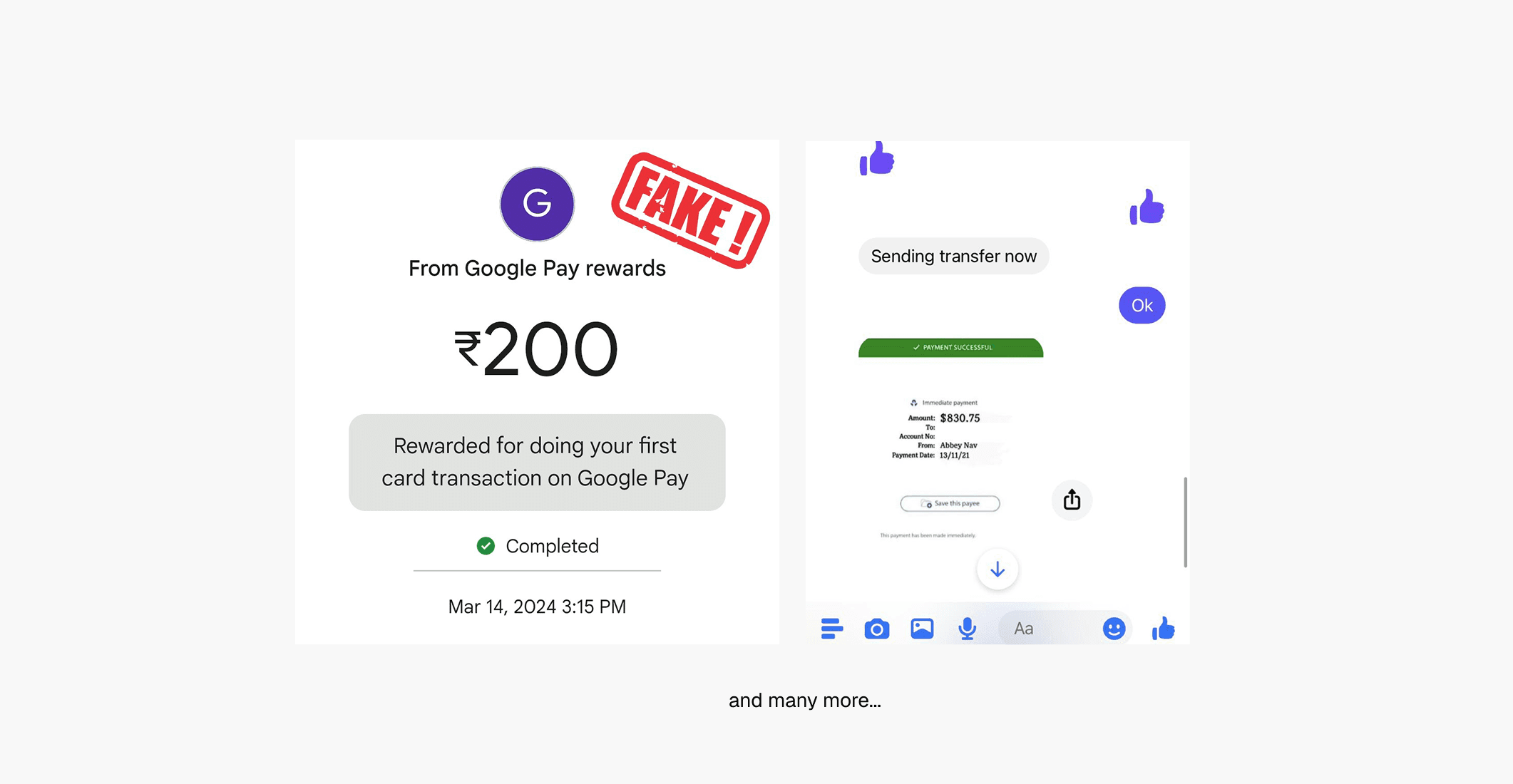
People weren't looking for surveillance. They were looking for a way to be honest without a fight.
People weren't looking for surveillance. They were looking for a way to be honest without a fight.
Approach
Approach
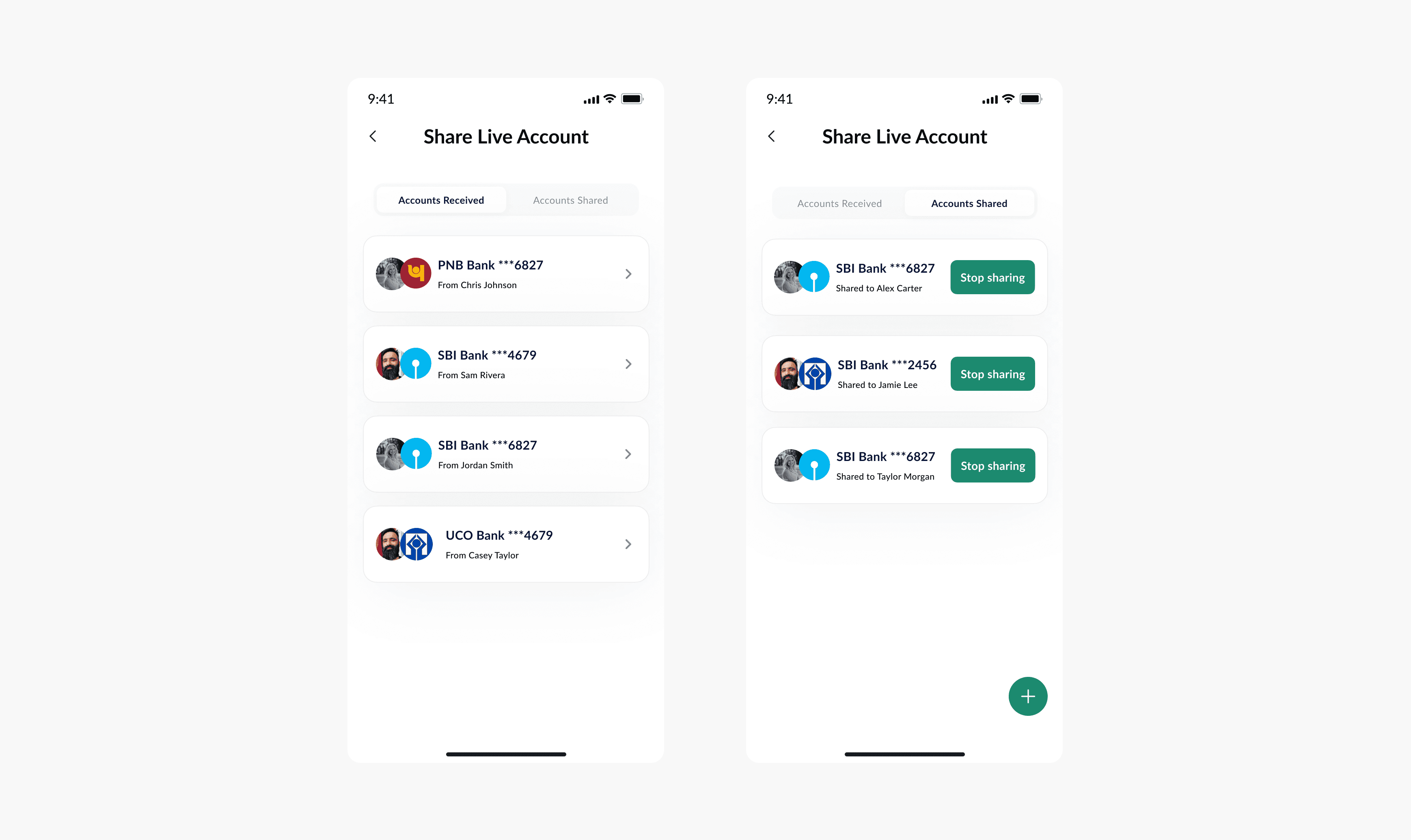
The biggest call: checkboxes, not "all selected by default with no option to de-select"
The biggest call: checkboxes, not "all selected by default with no option to de-select"
The principle behind this decision was User Control and Freedom. The third Nielsen heuristic, it says that users should always feel in control of the system, with clear options to make choices and change their minds. The opposite of control is a binary "share everything or nothing" toggle.
The principle behind this decision was User Control and Freedom. The third Nielsen heuristic, it says that users should always feel in control of the system, with clear options to make choices and change their minds. The opposite of control is a binary "share everything or nothing" toggle.
When you start sketching a sharing feature, the obvious first version is binary. Either you share your account or you don't. Toggle on, toggle off. That works fine for products built on trust by default.
When you start sketching a sharing feature, the obvious first version is binary. Either you share your account or you don't. Toggle on, toggle off. That works fine for products built on trust by default.
It doesn't work for family finances. A binary toggle would force users to choose between hiding everything and exposing everything. Both of those make people uncomfortable, and uncomfortable users don't use the feature at all. I tried a radio-button version too, share balance only or share everything or share nothing, and it felt like a checkbox done badly. So the real design problem became how to give people genuine control over what they shared, not just whether they shared.
It doesn't work for family finances. A binary toggle would force users to choose between hiding everything and exposing everything. Both of those make people uncomfortable, and uncomfortable users don't use the feature at all. I tried a radio-button version too, share balance only or share everything or share nothing, and it felt like a checkbox done badly. So the real design problem became how to give people genuine control over what they shared, not just whether they shared.

Why this matters
Why this matters
The whole point of the feature was control. If I'd made it all-or-nothing, I'd have been forcing users to choose between "hide everything" and "expose everything." Both options make people uncomfortable. Uncomfortable users don't use the feature.
The whole point of the feature was control. If I'd made it all-or-nothing, I'd have been forcing users to choose between "hide everything" and "expose everything." Both options make people uncomfortable. Uncomfortable users don't use the feature.
The checkbox approach turned "do you want to share?" into "what do you want to share?" That's a much easier question to say yes to.
The checkbox approach turned "do you want to share?" into "what do you want to share?" That's a much easier question to say yes to.
It also covered the founder's original concern. The fake screenshot problem wasn't really about lying. It was about not having a graceful way to share partial truth. Checkboxes gave people exactly that.
It also covered the founder's original concern. The fake screenshot problem wasn't really about lying. It was about not having a graceful way to share partial truth. Checkboxes gave people exactly that.
Solution
WhatsApp-style invitations
WhatsApp-style invitations
The fastest way to onboard a family member was the way they already knew. Send an invite link via WhatsApp, iMessage, or direct message. Recipient clicks, lands on Kniru, signs up, gets access. No new mental model.
The fastest way to onboard a family member was the way they already knew. Send an invite link via WhatsApp, iMessage, or direct message. Recipient clicks, lands on Kniru, signs up, gets access. No new mental model.
The principle here was Consistency and Standards, Nielsen's fourth heuristic. The idea is that users shouldn't have to learn new patterns when familiar ones already exist.
The principle here was Consistency and Standards, Nielsen's fourth heuristic. The idea is that users shouldn't have to learn new patterns when familiar ones already exist.

Mute notifications without losing the data
Mute notifications without losing the data
Recipients can choose to see transactions in-app without getting pinged for every one. The data is still there when they want to check. This came directly from research.
Recipients can choose to see transactions in-app without getting pinged for every one. The data is still there when they want to check. This came directly from research.
Revoke and edit anytime
Revoke and edit anytime
Sharers can change what's visible or revoke access at any point. Family relationships shift. The feature had to too.
Sharers can change what's visible or revoke access at any point. Family relationships shift. The feature had to too.
The principle behind this was the right to undo. Originally from Ben Shneiderman's 8 Golden Rules of Interface Design, the idea is that any meaningful action a user takes should be reversible. In a sharing feature, this matters even more, because family dynamics shift.
The principle behind this was the right to undo. Originally from Ben Shneiderman's 8 Golden Rules of Interface Design, the idea is that any meaningful action a user takes should be reversible. In a sharing feature, this matters even more, because family dynamics shift.

Impact and learnings
Impact and learnings
I worked directly with Kniru's CEO on this, with no PM or design lead in between. He had lived the problem the product was solving, so we never had to debate whether the feature mattered, only how to build it. That changed how I worked. Instead of building decks to sell decisions, I would share findings, talk through trade-offs, sketch the next version, and move. It taught me how to communicate design decisions to someone who cares about the outcome more than the process.
I worked directly with Kniru's CEO on this, with no PM or design lead in between. He had lived the problem the product was solving, so we never had to debate whether the feature mattered, only how to build it. That changed how I worked. Instead of building decks to sell decisions, I would share findings, talk through trade-offs, sketch the next version, and move. It taught me how to communicate design decisions to someone who cares about the outcome more than the process.
A "share everything by default" version
A "share everything by default" version
The simplest path was to make sharing all-or-nothing and nudge users toward "share all." Faster to build, easier to explain. Killed it because research kept telling me the opposite was true.
The simplest path was to make sharing all-or-nothing and nudge users toward "share all." Faster to build, easier to explain. Killed it because research kept telling me the opposite was true.
A family workspace
A family workspace
At one point we explored a community-style screen where multiple family members' net worth would show up together. Interesting idea but raised real privacy questions and felt premature for a first version. Parked for later.
At one point we explored a community-style screen where multiple family members' net worth would show up together. Interesting idea but raised real privacy questions and felt premature for a first version. Parked for later.
The real thing I took from Kniru is that a sharing feature is a trust feature. The design question isn't "how do I make this easy?" It's "how do I make this feel safe?" The checkbox versus radio decision sounds tiny written down. It changed everything about how the feature felt to use. Small controls carry a lot of emotional weight, and noticing which ones do is most of the job.
The real thing I took from Kniru is that a sharing feature is a trust feature. The design question isn't "how do I make this easy?" It's "how do I make this feel safe?" The checkbox versus radio decision sounds tiny written down. It changed everything about how the feature felt to use. Small controls carry a lot of emotional weight, and noticing which ones do is most of the job.
Other Work at Kniru
Other Work at Kniru
A quick walkthrough of the other features I designed during my six months on the team. No deep process here, just what shipped and what I learned.
A quick walkthrough of the other features I designed during my six months on the team. No deep process here, just what shipped and what I learned.
ONBOARDING & KYC
ONBOARDING & KYC
Designed the full first-time flow. Bank account linking via OTP, KYC with PAN and Aadhar, multi-bank selection for tracking. Used Plaid integration for international banks for users outside India.
Designed the full first-time flow. Bank account linking via OTP, KYC with PAN and Aadhar, multi-bank selection for tracking. Used Plaid integration for international banks for users outside India.

HOME DASHBOARD
HOME DASHBOARD
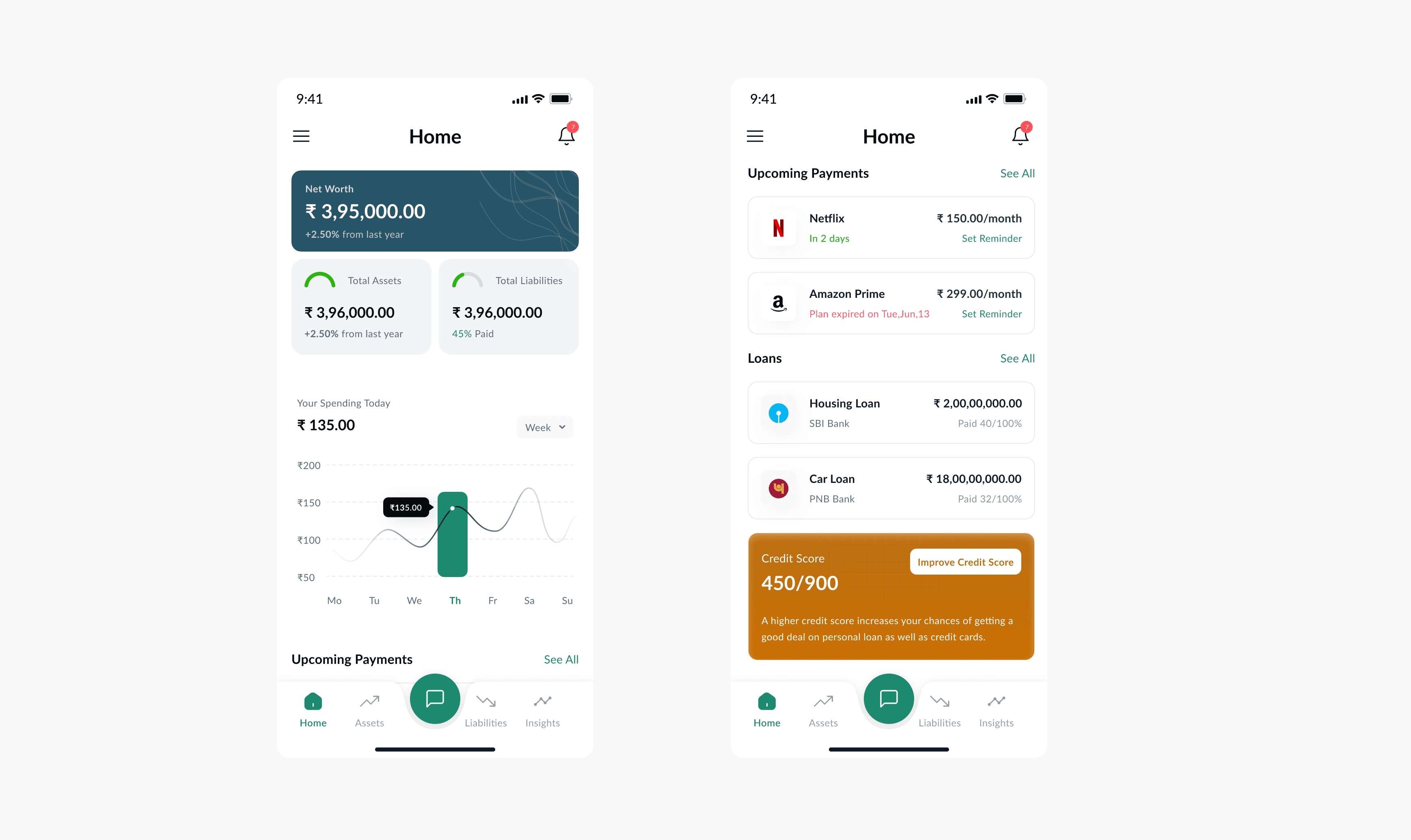
The main screen. Total balance, net worth, total assets, total liabilities at a glance. Plus upcoming payments and spending overview.
The main screen. Total balance, net worth, total assets, total liabilities at a glance. Plus upcoming payments and spending overview.
LIABILITIES
LIABILITIES
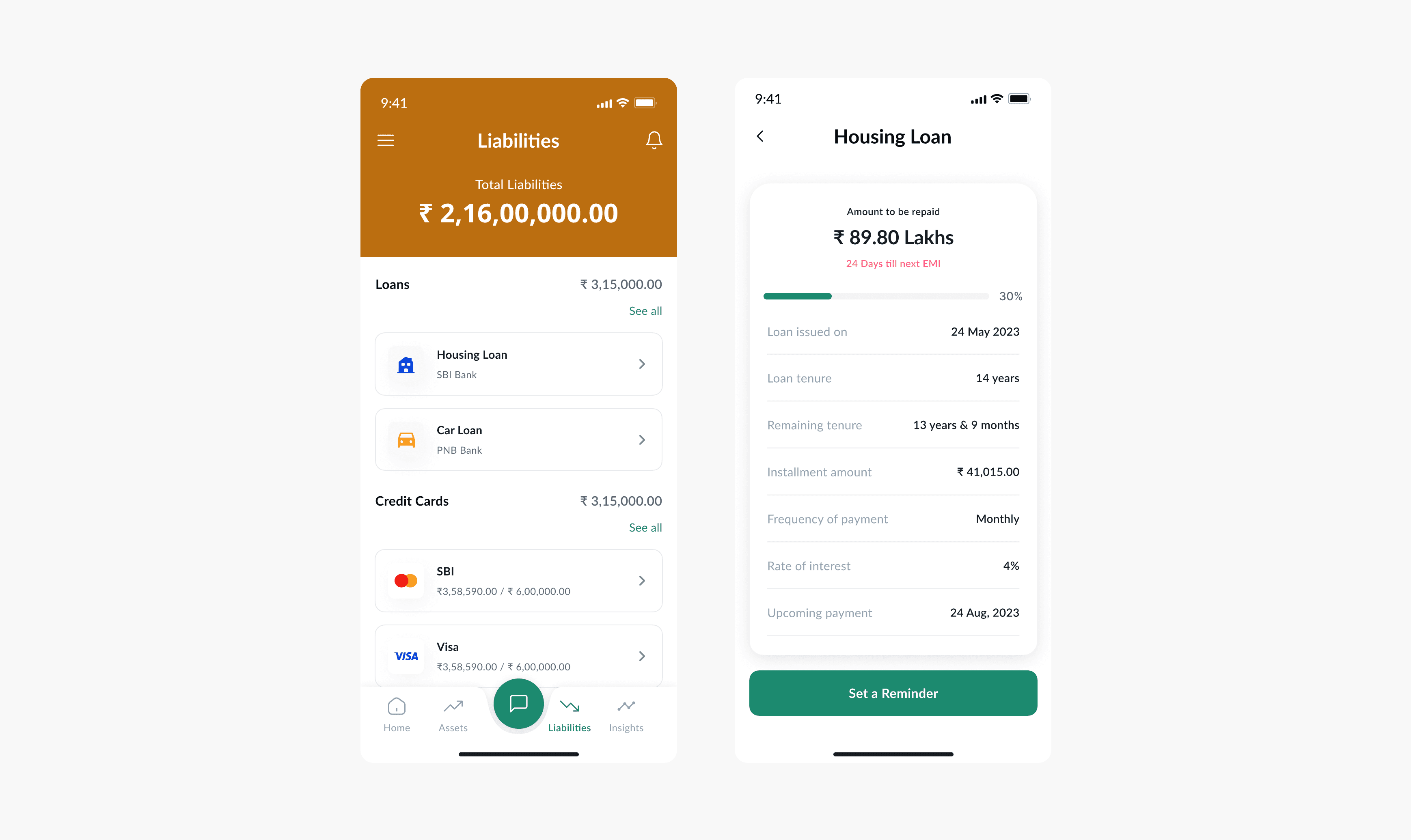
Add and track loans, credit cards, and bills. Detailed view shows when the loan was issued, full tenure, remaining tenure, installment amount, next EMI date.
Add and track loans, credit cards, and bills. Detailed view shows when the loan was issued, full tenure, remaining tenure, installment amount, next EMI date.
ASSETS
ASSETS
Multi-bank accounts plus investments, real estate, and miscellaneous tracking. Everything in one place.
Multi-bank accounts plus investments, real estate, and miscellaneous tracking. Everything in one place.

INSIGHTS
INSIGHTS
Subscription tracking (Netflix, Amazon Prime, YouTube Premium), credit card payments, bills, and utilities. Add them to calendar reminders. Budget creation with AI suggestions.
Subscription tracking (Netflix, Amazon Prime, YouTube Premium), credit card payments, bills, and utilities. Add them to calendar reminders. Budget creation with AI suggestions.

AI ASSISTANT
AI ASSISTANT
A dedicated tab in the bottom nav. Ask anything from "how can I improve my credit score" to "where am I overspending this month." Built on top of the AI engineer's models.
A dedicated tab in the bottom nav. Ask anything from "how can I improve my credit score" to "where am I overspending this month." Built on top of the AI engineer's models.